
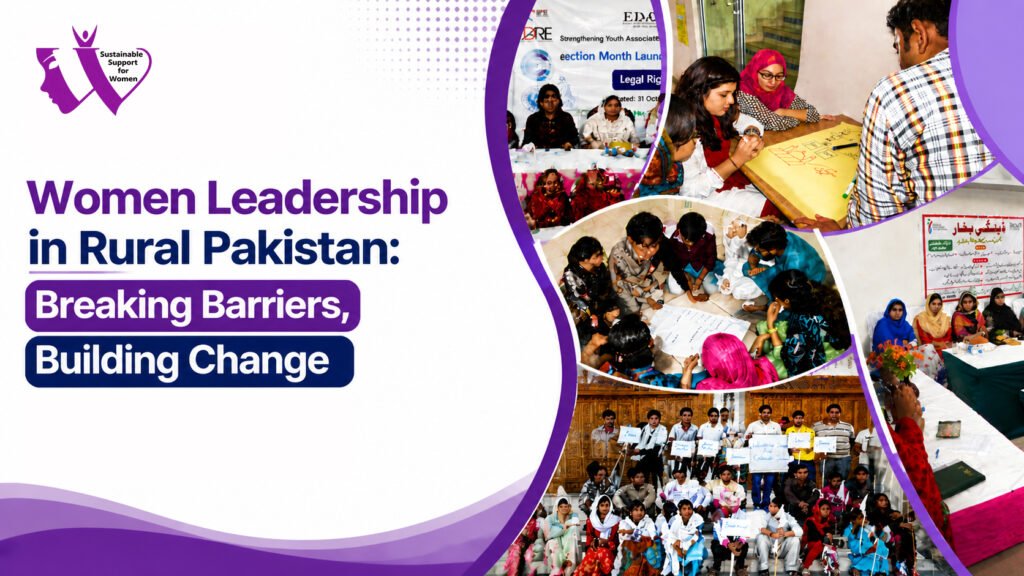
Across the fields, mountains, and small villages of Pakistan, millions of women carry their communities on their shoulders. They grow food, raise children, manage households, and support local economies. Yet when it comes to political decisions that shape their lives, their voices are rarely heard in the rooms where it happens.
This is the reality of women leadership in rural Pakistan — a story of immense strength facing immense structural resistance.
At SSWhub, we work directly with rural women across Pakistan through leadership training, skills development, digital literacy programs, and political empowerment initiatives. What we see on the ground is this: the women are ready. The systems around them need to change.
Why Women Leadership in Rural Pakistan Matters
Rural Pakistan makes up over 60% of the country’s total population. Women represent nearly half of that — yet their representation in local government councils remains critically low.
Research consistently shows that when women hold leadership positions in rural communities, outcomes improve across the board: better resource allocation for health and education, stronger accountability in local governance, and more inclusive policy decisions.
Women leadership in rural Pakistan is not a charity issue. It is a governance issue, an economic issue, and a rights issue.
A village where women lead is a village that does not leave half its intelligence on the table.
Challenges Faced by Women Leaders in Rural Pakistan
The challenges faced by women leaders in rural Pakistan are not abstract. They are specific, layered, and deeply rooted in both culture and policy failure. Here are the real barriers that SSWhub’s programs encounter and address every day:
- Mobility restrictions: Women in many rural areas require permission from male family members to travel, attend meetings, or participate in public events — making campaign work and governance roles nearly impossible.
- Social stigma: A woman who speaks publicly about politics is often labeled negatively. This social cost discourages many capable women from trying.
- Lack of legal awareness: Most rural women do not know their voting rights, registration rights, or the legal protections available to them.
- Financial dependency: Without independent income, women cannot fund campaigns, pay registration fees, or sustain themselves through the process of seeking office.
- Absence of female role models: With so few women in visible leadership, younger women have no local reference point for what female leadership looks like.
- Proxy politics: In many cases, women are formally elected but male relatives exercise actual authority — a pattern SSWhub actively works to identify and counter.
These challenges faced by women leaders in rural Pakistan are not insurmountable — but they require deliberate, ground-level intervention, not just policy statements from Islamabad.
Rural Women Day: Recognizing Leadership on the Ground
Every year, Rural Women Day (October 15) draws global attention to the contributions and struggles of women in agricultural and rural settings. In Pakistan’s context, this date is an opportunity to spotlight the women who are already leading — informally, without titles, without recognition.
SSWhub uses Rural Women Day as an annual platform to:
- Celebrate women community leaders who have driven visible change in their villages.
- ⦁ Host awareness sessions in partnership with local government offices
- ⦁ Launch new cohorts of SSWhub’s Leadership Readiness Program for rural women.
- Connect rural women leaders with urban networks, media, and policy advocates.
Rural Women Day is not just a symbolic date. For SSWhub, it is a strategic entry point — a moment when communities are more open to conversations about women’s roles in public life.
Barriers to Female Leadership in Small Pakistani Villages
The situation becomes even more acute in small Pakistani villages — settlements often with no paved roads, no reliable internet, and limited government presence. In these settings, SSWhub’s field teams document barriers that rarely appear in academic reports:
- Absence of safe meeting spaces: There is often no venue where women can gather privately to discuss political matters without male oversight.
- Low literacy rates: In Pakistan’s most remote villages, female literacy can be as low as 20-30%, limiting access to forms, registration processes, and formal political engagement.
- Jirga-based governance: In areas where informal tribal councils hold practical authority, formal elections have limited impact — and these councils exclude women entirely.
- Watta satta pressure: Women married into families through exchange agreements face double household control, making any external engagement extremely difficult.
- Fear of violence: For women who attempt to run for office or organize politically, threats are a real deterrent that is underreported and under-addressed.
Addressing barriers to female leadership in small Pakistani villages requires hyper-local strategies. SSWhub’s model is built on this principle: every village has its own power structure, and sustainable change requires deep community trust built over time.
The Impact of Digital Literacy on Rural Women Leaders
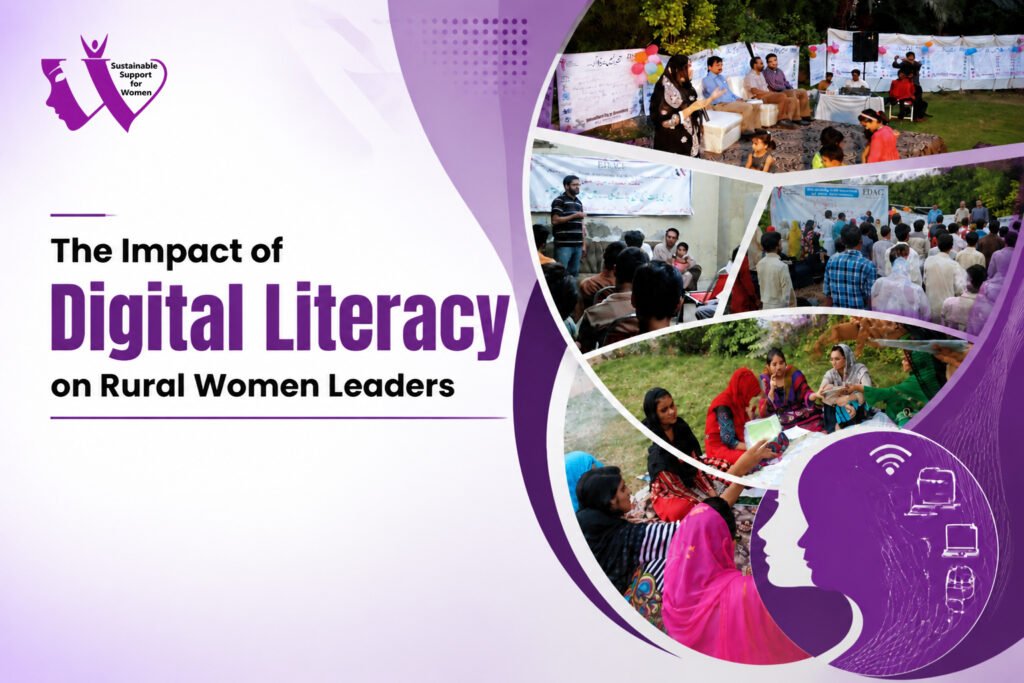
One of the most transformative shifts SSWhub has witnessed is what happens when rural women gain basic digital skills. The impact of digital literacy on rural women leaders is significant and measurable — even at very basic levels of access.
SSWhub’s digital literacy program participants report:
- Ability to document village-level issues with photos and videos and share them with district officials or media
- Access to legal aid services and women’s rights organizations through WhatsApp and helpline apps
- Participation in online training sessions, removing the barrier of physical travel
- Increased confidence in public communication — speaking to a phone camera translates to speaking at a council meeting
- Financial independence through mobile money platforms and e-commerce skills
The impact of digital literacy on rural women leaders goes beyond technology skills. A woman who can document a rights violation on her phone and send it to a journalist or NGO has leverage she did not have before.
SSWhub’s digital literacy program currently operates in 4 provinces, with training delivered in local languages — Punjabi, Sindhi, Pashto, and Balochi — because language is itself a barrier when all digital tools default to Urdu or English.
What SSWhub Is Doing: Programs Built for the Ground
SSWhub is a women-focused organization running multiple interconnected programs designed specifically for rural contexts in Pakistan. Our work is implemented at the district and Union Council level, in partnership with local women’s groups and community leaders.
Our current programs directly addressing women leadership in rural Pakistan:
- Leadership Readiness Program: A structured 12-week training covering civic rights, public speaking, conflict resolution, and political process awareness
- Digital Literacy for Rural Women: Hands-on training in mobile use, internet navigation, mobile banking, and online communication — in local languages
- Skills Development Workshops: Vocational and entrepreneurship training that builds economic independence as a foundation for political participation
- Village Ambassador Network: A peer-to-peer model where trained women become community anchors who continue outreach and mentoring within their own villages
- Political Entry Support: Guidance for women who wish to contest local government seats, including nomination forms, campaign basics, and voter outreach
At SSWhub, we believe skills, voice, and opportunity must be built together. Economic dependence and political exclusion reinforce each other. Our programs are designed to break both cycles simultaneously.
The Path Forward: What Actually Needs to Change
Progress on women leadership in rural Pakistan has been slow, uneven, and frequently reversed when political attention shifts. The reserved seats system for women in local government exists — but proxy control of women’s seats remains common. Based on SSWhub’s ground experience, what needs to change:
- Strict enforcement of reserved seat laws with real accountability for proxy male control of women’s council positions
- National investment in digital infrastructure in rural areas — without internet access, digital literacy programs have limited reach
- Mandatory civics education in rural schools that includes women’s political rights
- Funding for safe community spaces where women can organize and plan without male oversight
- Long-term NGO and government partnerships sustained across election cycles — not just activated during election season
The women of rural Pakistan do not need to be saved. They need systems that stop blocking them.
SSWhub exists because talent and determination in rural women is not the problem. Access and opportunity are the problem.
Conclusion: Leadership Is Already There — It Needs Space to Grow
Women leadership in rural Pakistan is not a future aspiration. It is a present reality being suppressed by structural barriers, social stigma, and policy gaps. The women who participate in SSWhub programs are not learning to become leaders — they are learning to operate in systems that were not built for them.
The challenges faced by women leaders in rural Pakistan are real and serious. The barriers to female leadership in small Pakistani villages are specific and local. But so are the solutions — and SSWhub is committed to implementing them with the rigor, community trust, and long-term presence that this work demands.
If you are a rural woman reading this: your voice matters in your village’s future. SSWhub’s programs are designed for you.
If you are a policy maker, donor, or advocate: the data is clear, the need is urgent, and organizations like SSWhub are doing the ground work. The question is whether the resources and political will follow.