Education Access · Girls' Literacy & Schooling
Girls' Education in Pakistan: Every Daughter Deserves aDesk
When a girl learns to read, a family changes course and a community follows. SSWHub helps Pakistani girls get into the classroom — and stay there until they finish.
children out of school in Pakistan
of out-of-school children are girls
female literacy, against ~68% for males
constitutional right to free schooling, ages 5–16
A Generation Locked Out of the Classroom
A girl with an education negotiates her own future — she marries later, earns more, and educates her own children in turn. None of this is theory in Pakistan. Yet for millions of girls, the classroom door is still closed.
Pakistan has roughly 26 million out-of-school children, and around 53 percent of them are girls — a gap so serious the government declared a National Education Emergency in 2024. Article 25-A of the Constitution guarantees free and compulsory schooling for every child aged 5 to 16. The promise exists on paper. The reality does not.
The numbers worsen with age. Enrollment is closest to parity in early primary years, then collapses: of the girls who start, far fewer reach lower secondary, and fewer still complete it. Nationally, female literacy sits near 52 percent against roughly 68 percent for boys — a gap that has barely moved in a generation.
The reasons behind girls’ school dropout issues in Pakistan are practical, not mysterious. In rural girls’ education in Pakistan, the nearest secondary school may be kilometres away with no safe transport. Families under financial pressure pull daughters out first. Early marriage ends schooling abruptly. And in many communities, the importance of female education is simply not believed. Sindh and Balochistan carry the heaviest burden, where rural girls face the highest exclusion rates in the country.
Trust Has to Be Earned — So We Earn It
The through-line of our work is women empowerment through education: not a slogan, but a measurable outcome — a girl who completes school, earns an income, and decides her own life.
Every contribution is tracked to a girl, a school, and an outcome. Our reports publish enrollment, retention, and completion data by district — including where we fell short.
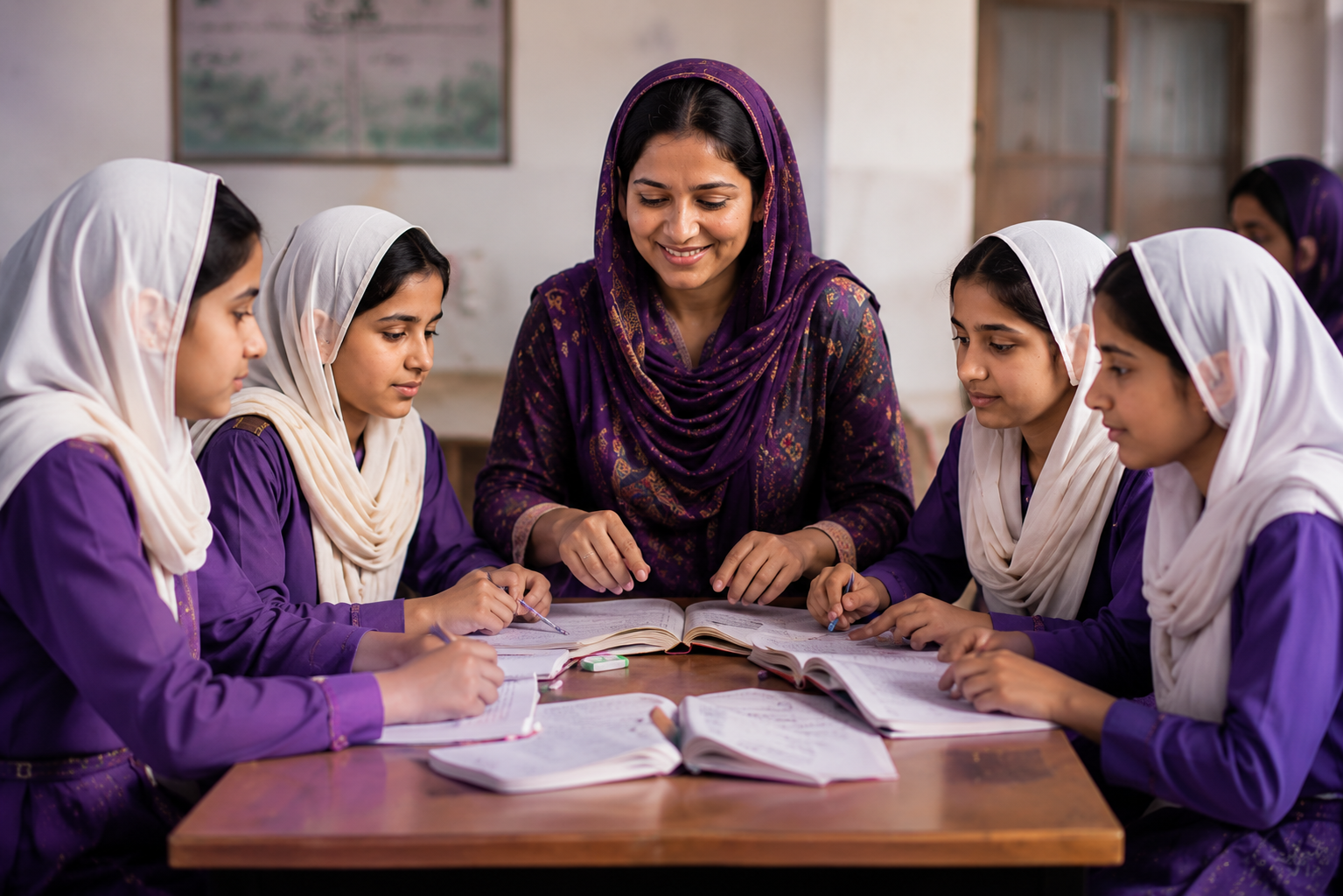
Our work is designed with local women and educators, not imposed from outside. The people who run our learning hubs come from the villages they serve, so the program outlasts any single grant.
We measure success not in students enrolled this year, but in girls who finish school and stay literate for life. A backpack is forgotten in a season; a graduate changes a family's arithmetic.
Support a Girl's Education
For donors, your support funds durable change, not a photograph. For families, it means a partner that keeps its word.
Frequently Asked Questions
What Families & Supporters Ask Us Most
Because it compounds. An educated girl earns more, marries later, has healthier children, and is far more likely to educate them in turn. Female education is the most cost-effective development investment available — its returns reach the whole community, not just one girl.
Yes. We run accelerated literacy and re-entry pathways specifically for girls who left school. It is rarely too late, and we will help you find the right starting point for her age and level.
Through a mix of local school partnerships, scholarships covering transport and fees, and online learning for girls where no school is nearby. Rural girls’ education in Pakistan is our priority, not an afterthought.
Absolutely. We work directly with parents and communities, providing the practical and social support that makes keeping a daughter in school realistic — and we stand with families who choose it.
You can sponsor a girl’s schooling, fund a learning hub, mentor remotely, or help raise awareness. Every form of support widens access for a girl who is ready to learn.