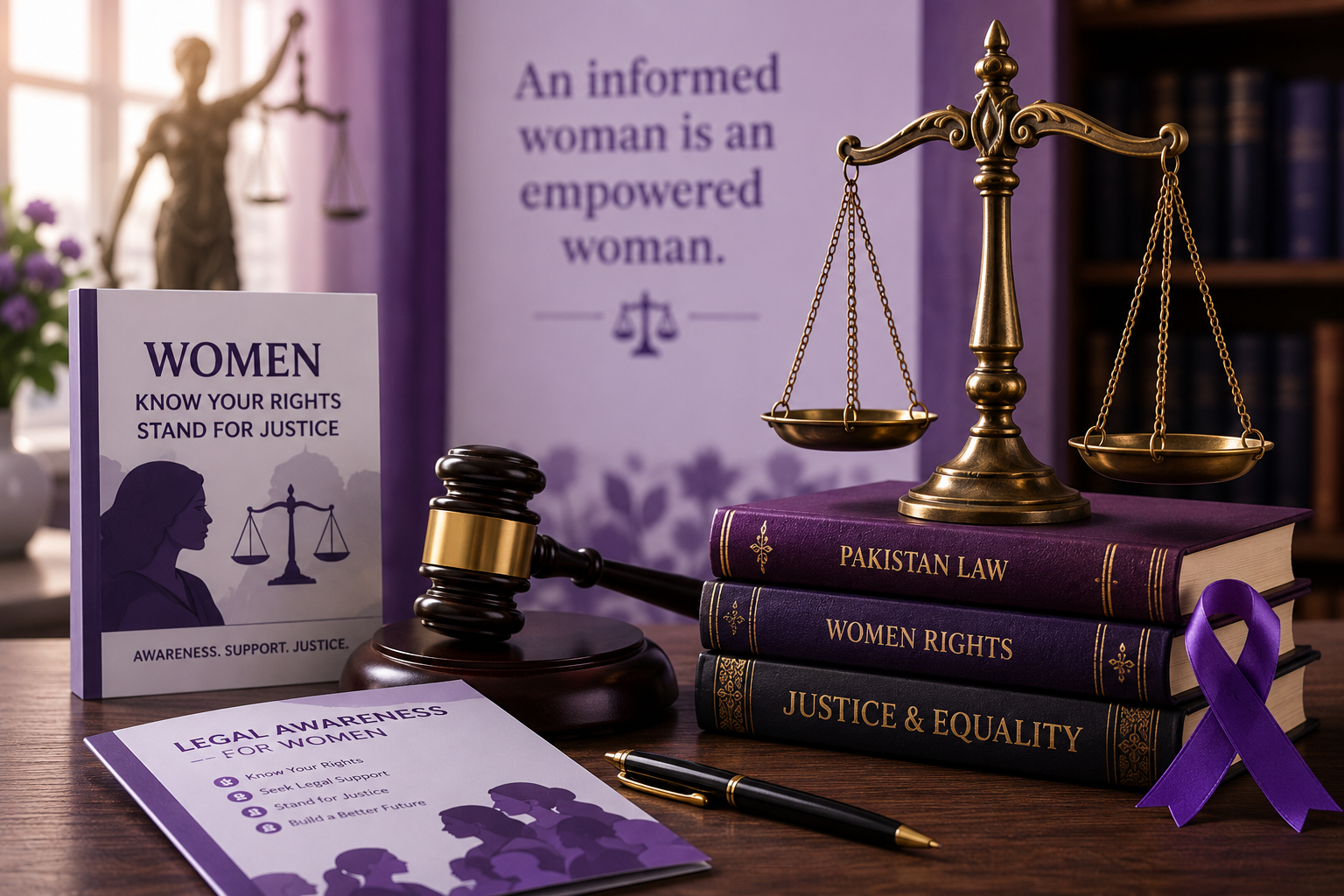
Pakistan's laws protect you — in your marriage, workplace, home, and court. Most women simply don't know where to start. SSWHub changes that, for free.
Pakistan has real constitutional and legal protections for women — Article 25 of the Constitution, the Women Protection Act Punjab 2016, the Anti-Harassment Law 2010, and family court statutes covering divorce, custody, and inheritance. The problem isn’t the law. It’s that most women can’t reach it.
Constitutional and Legal Rights of Women in Pakistan
Pakistan’s legal framework offers substantial protections across family law, criminal law, and constitutional rights. Here is what the law guarantees you — and how SSWHub helps you act on it.
The Law Exists. The Access Does Not.
_______
Divorce Rights for Women in Pakistan
Under the Muslim Family Laws Ordinance 1961, you can file for Khul (dissolution of marriage) through the Family Court — even without your husband’s consent. Valid grounds include cruelty, desertion, failure of maintenance, and others.
Courts must hear your case within 6 months under the Family Courts Act 1964.
Your mehr (dower) remains a legal financial obligation upon the husband
Divorce and child custody are separate legal matters — one does not cancel the other
SSWHub helps: We connect you with family law paralegals who guide you through documentation and filing — at no cost.
______
Child Custody Rights Mother’s Position
Mothers have Hizanat — the primary right to physical custody of young children under Pakistani law. Courts apply a best-interest-of-the-child standard, and custody is not automatically lost upon remarriage.
Mothers typically retain custody of sons until age 7, daughters until puberty Courts Act 1964.
Documented domestic violence can support a claim for full custody
Fathers retain guardianship rights — these are distinct from physical custody
SSWHub helps: We provide guidance on interim custody filings during ongoing proceedings.
_______
Women Harassment Law in Pakistan
The Protection Against Harassment of Women at the Workplace Act 2010 covers all employers — government and private. Harassment includes unwelcome sexual conduct, intimidation, and hostile work environments.
File directly with the Federal or Provincial Ombudsperson if your employer fails to act
The full inquiry must be completed within 30 working days
Retaliation against the complainant is itself a punishable offence
Facing retaliation after complaining? You can escalate directly to the Provincial Ombudsperson SSWHub can help you draft this complaint.
______
Women Protection Act — Punjab 2016
This Act created Pakistan’s first Violence Against Women Centres (VAWCs) and introduced legally enforceable Protection Orders. It remains one of South Asia’s most comprehensive domestic violence laws.
A Protection Order can legally prohibit the abuser from entering your home
Residence Orders ensure you are not evicted from your marital home VAWCs in major Punjab districts provide free one-window legal, medical, and shelter services
Similar protections exist under Sindh’s Domestic Violence Prevention Act 2
Every Voice Has Power To create Chnage
Supporting women’s political participation helps build stronger communities, equal representation, and a more inclusive future for Pakistan.
How to File an FIR for Domestic Violence in Pakistan
Most women don't file because no one clearly explained the process. Here it is.
Document What You Can
Photographs, threatening messages, medical records, and witness names all strengthen your case. But you can file on your statement alone — documentation is not a requirement.
Go to the Relevant Police Station
Under Section 154 CrPC, the police are legally obligated to register your FIR. Refusal is an offence. If they refuse, approach the DSP, SP, or file directly with a Judicial Magistrate.
Request a Female Officer
You have the right to give your statement to a female police officer. If none is available, insist your statement is read back to you before signing.
Collect Your FIR Copy Immediately
A free copy is your legal right. Keep it safe — it is the foundation of all follow-up legal steps. If a copy is denied, report this to the SP’s office.
Apply for a Protection Order
Simultaneously approach a Family Court or VAVC to request an emergency Protection Order. Under the Punjab Women Protection Act 2016, this can be issued within 24 hours in urgent cases.